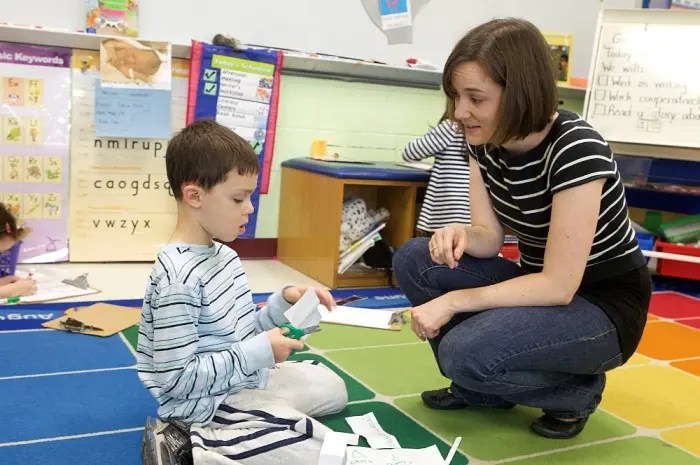
Effective Teaching Strategies for Children with Special Needs

Educating children with special needs requires a thoughtful, personalized approach that accommodates their unique learning styles, strengths, and challenges.

The goal is to foster an inclusive environment that promotes their academic, social, and personal development. Here, we outline comprehensive and effective teaching strategies that cater to the diverse needs of special education students.

1. Individualized Education Programs (IEPs)

Individualized Education Programs (IEPs) are foundational in special education, providing tailored educational plans that address the specific needs, goals, and abilities of each student.

Developing an IEP involves collaboration among educators, parents, and specialists, ensuring a holistic approach to the child’s development.

2. Multi-Sensory Instruction

Multi-sensory instruction techniques involve using various senses to aid in learning.

This approach can be particularly beneficial for children with learning disabilities, as it allows them to process information in ways that are most effective for them, whether it be through visual, auditory, kinesthetic, or tactile methods.

3. Use of Assistive Technology

Incorporating assistive technology into the classroom can significantly enhance learning for children with special needs.

Tools such as speech-to-text software, audiobooks, and specialized keyboards can provide alternative means for students to engage with the curriculum and express their understanding.

4. Differentiated Instruction

Differentiated instruction is a flexible approach that adjusts the curriculum, teaching methods, and learning activities to meet the varied needs of students.

By providing multiple paths to learning, educators can ensure that each child receives instruction tailored to their strengths and challenges.

5. Positive Behavior Support

Implementing positive behavior support strategies can help manage and improve challenging behaviors in children with special needs.

This approach focuses on teaching new skills to replace problematic behaviors, creating supportive environments, and reinforcing positive actions.

6. Structured Learning Environment

Creating a structured learning environment with clear routines and expectations can provide the stability and predictability that many children with special needs require. Such an environment helps minimize distractions and enables students to focus on learning.

7. Peer Tutoring and Cooperative Learning

Peer tutoring and cooperative learning strategies encourage interaction among students, fostering a sense of community and belonging. These approaches can enhance social skills, build confidence, and provide additional academic support for children with special needs.

8. Visual Supports

Utilizing visual supports, such as picture schedules, charts, and graphic organizers, can aid in comprehension and memory for students with cognitive and communication challenges. Visual aids help clarify expectations and make abstract concepts more concrete.

9. Continuous Assessment and Feedback

Engaging in continuous assessment and feedback allows educators to monitor progress, identify areas of need, and adjust teaching strategies accordingly. This ongoing process ensures that instruction remains responsive to the student’s evolving needs.

10. Professional Development and Collaboration

Finally, professional development and collaboration among teachers, special education professionals, and therapists are crucial for the effective implementation of these strategies.

Sharing knowledge and resources can lead to innovative solutions and a more cohesive support system for students with special needs.

Conclusion

Teaching children with special needs demands a commitment to innovative, flexible, and compassionate educational practices.

By employing these effective teaching strategies, educators can create inclusive classrooms where all students have the opportunity to succeed and thrive.

The journey requires patience, creativity, and collaboration, but the rewards—witnessing the growth and achievements of every student—are immeasurably fulfilling.

Selecting the Right Learning Method for Your Child According to Their Learning Style

In the realm of education, understanding and catering to the unique learning style of each child is paramount for fostering effective learning experiences.

With an array of learning methods available, parents and educators are often at a crossroads when it comes to selecting the most suitable approach.

This comprehensive guide aims to elucidate the process of choosing the right learning method for your child, ensuring it aligns perfectly with their inherent learning style.

Understanding Learning Styles

Before diving into the selection of learning methods, it’s crucial to grasp the concept of learning styles. Broadly categorized into visual, auditory, reading/writing, and kinesthetic, each style has its distinct characteristics and preferences.

  • Visual Learners: These learners excel when information is presented in diagrams, charts, and other visual formats.
  • Auditory Learners: They prefer listening to explanations and thrive in environments where verbal instruction is predominant.
  • Reading/Writing Learners: This group finds comfort in written words, whether it’s reading textbooks or writing notes.
  • Kinesthetic Learners: Kinesthetic learners favor a hands-on approach, learning best through doing and experiencing.

Selecting the Right Learning Method

Once you’ve identified your child’s learning style, the next step is to choose a learning method that complements it. Here’s how you can align learning methods with each style:

1. For Visual Learners

Implementing visual aids such as infographics, educational videos, and interactive software can significantly enhance the learning experience for visual learners. Incorporating color-coded notes and mind maps into study sessions can also be beneficial.

2. For Auditory Learners

Auditory learners will benefit from lecture-based learning and discussion groups where verbal interaction is key. Utilizing audiobooks, educational podcasts, and oral presentations can cater to their learning preferences effectively.

3. For Reading/Writing Learners

To support reading/writing learners, text-heavy materials and opportunities for extensive note-taking are essential. Encourage journaling, essay writing, and the use of online forums where they can express their understanding through written words.

4. For Kinesthetic Learners

For those who are kinesthetic learners, incorporating physical activities and experiential learning opportunities into the curriculum is vital. Lab experiments, field trips, and role-playing activities can provide the hands-on experience they need to grasp complex concepts.

Adapting to Mixed Learning Styles

It’s not uncommon for children to exhibit a mix of learning styles. In such cases, a hybrid approach, combining elements from various methods, can be adopted to cater to the multifaceted nature of their learning preferences.

The Role of Technology in Modern Learning

In today’s digital age, technology plays a pivotal role in education, offering a plethora of tools that can be customized to fit different learning styles.

From interactive apps that provide visual simulations to online platforms that facilitate collaborative learning, the potential to enhance educational outcomes through technology is immense.

Creating a Supportive Learning Environment

Beyond selecting the right method, creating an environment that supports your child’s learning journey is crucial.

This includes providing encouragement, understanding their challenges, and being actively involved in their educational process.

Conclusion

Choosing the appropriate learning method for your child is a significant step towards enabling their academic success and personal growth.

By understanding their learning style and aligning it with the right educational tools and techniques, you can unlock their full potential and pave the way for a lifelong love of learning.

Remember, the goal is not just academic excellence but nurturing a well-rounded, confident, and curious individual ready to explore the vast world of knowledge.

Create your own website, free on WordPress.com.Create your own website.
Start free